
to be stranded, to strand 
[verb]
[stran-den, strand-de, ge-strand]

Derived from the noun "strand" (beach) this verb takes on the meaning of "washing ashore" (of goods), or "running aground/ashore" (of ships). However, it is more commonly used in its (figurative) translation of "to be stranded" or "to fail/strand". Note the ‘second d’ in the past tense.
Examples:
– "Ik heb medelijden met al die mensen die op de luchthaven zijn gestrand."
("I feel sorry for all those people who stranded at the airport.")
– "Zijn vernieuwende plannen strandden al in een vroeg stadium."
("His innovative plans already came to a hold at an early stage.")
– "Met een beetje geluk houdt die vulkaan weer op en strand ik niet op de terugweg!"
("With a little luck this vulcano will stop again, and I won’t get stuck on the way back!")
– "De gestrande walvis trok veel bekijks."
("The stranded whale drew a lot of attention." The word ‘bekijks’ is derived from ‘kijken‘: to look, to watch. ‘Bekijks trekken’ translates to something like ‘to draw look-upon’.)
Related words:
– Strand: beach [noun] [het strand, de stranden].
– Vast: fixed, attached, stuck [adverb/adjective].
Example:
– "Debbie en Nikki zijn gestrand in Bangkok en zitten nog vast tot zeker het einde van de maand."
("Debbie and Nikki stranded in Bangkok and are stuck until the end of the month at least.")


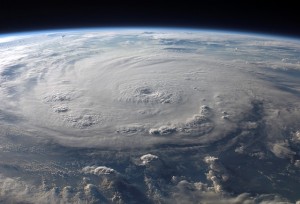 “Dampkring” is composed of “damp” en “kring”, which translate to “vapour” and “circle” respectively. The “vapour circle” around our planet is commonly known as the atmosphere 🙂 In Dutch, there’s also the synonymous “atmosfeer”.
 A “flater” is a stupid mistake in front of other people causing embarrassment. It’s more or less synonymous to “blunder”, which also translates to blunder, but the subtle difference is that a “blunder” is not necessarily witnessed by other people (causing the embarrassment).