Schoen

shoe [noun] [de schoen, de schoenen] Iconspeaker_3

SchoenmakerijAlright, let’s brush up on your shoe vocabulary here! It turns out that there is a lot to say about shoes in Dutch!

Look at your shoe (if you are wearing one) and repeat after me: schoen ("shoe"), zool ("sole"), veters ("(shoe)laces") and hak ("heel"). Now do you need some "schoenpoets" ("shoe polish"), or are you wearing "sportschoenen" ("running shoes", "trainers" etc.)? Possibly even "sneakers" ("sneakers")? What about "sandalen" ("sandals"), or "laarzen" ("boots"). Or do you prefer to go about "blootsvoets" ("bare foot(ed)")? (Which I don’t recommend if you have "zweetkakkies" 🙂 )

Now let’s look at some Examples, and don’t forget the Expressions (of which only a few are listed. Check out the dictionary to find more!).

Examples:
– "Ik kan mijn schoenen nergens vinden!"
("I can’t find my shoes anywhere!")

– "Morgenochtend heb ik een belangrijke presentatie dus ik moet mijn schoenen maar eens gaan poetsen."
("Tomorrow morning I have an important presentation so I guess I have to (go and) polish my shoes.")

– "Sinterklaas kapoentje, gooi wat in mijn schoentje…"
("Sinterklaas kapoentje, throw something in my shoe…" Line from children’s "Sinterklaas" song.)

– "Over het algemeen draag ik geen nette schoenen, alleen als het echt moet!"
("In general I do not wear dress shoes, only if absolutely necessary!")

– "Mevrouw, heeft u deze schoen in maat 42?"
("Miss/Madam, do you have this shoe in size 42?")

– "Laarzen, schoenen of sandalen, maakt niet uit, een ding is zeker: mijn vriendin heeft er te veel!"
("Boots, shoes or sandales, it doesn’t matter, one thing is for sure: my girlfriend has too many of them!" Note that here you have to write "te veel" and not "teveel", the latter being a noun: "surplus" ("het teveel"). By the way, this is done wrong by almost the entire Dutch population including journalists.)

Expressions:
– "Naast je schoenen lopen": literally "to walk next to your shoes", this says you’re to big for your boots (or full of conceit).
– "Stevig in je schoenen staan": to stand firm, to be sure of oneself.
– "Ik zou niet graag in zijn/haar schoenen willen staan": I wouldn’t like to be in his/her shoes.
– "Wie de schoen past, trekke hem aan": if the cap/shoe fits, wear it. Note that this is an example of the rare usage of the subjunctive in Dutch.
– "De stoute schoenen aantrekken": to do something that requires you to gather courage first, to pluck up one’s courage.

Example:
– "Weet je wat, ik trek de stoute schoenen aan, ik ga haar nu mee uit vragen."
("You know what, I’ll pluck up my courage, I’m going to ask her out right now.")

– "De schoen zetten": ‘to place/put your shoe’ this is the act of leaving your shoe somewhere hoping that Sinterklaas will leave you some candy (in your shoe).

Related words:
– (Schoen)veter: (shoe)lace [noun] [de veter, de veters].
– Laars: boot [noun] [de laarzen, de laarzen].
– Hak: heel [noun] [de hak, de hakken]. Note that in case of the heel of a foot, we say "hiel".
– Sandaal: sandal [noun] [de sandalen, de sandalen].
– Schoenen poetsen: to polish (shoes) [verb] [poetste, gepoetst].
– Schoenpoets: shoe polish [noun] [de schoenpoets, no plural].
– Schoenmaat: shoe size [noun] [de maat, de maten].
– Schoenlepel: shoehorn [noun] [de lepel, de lepels]. Note that a "lepel" is a spoon.
– Schoenenzaak: shoe shop/store [noun] [de zaak, de zaken].
Handschoen: glove.

Extra:
When you need your shoes to be mended/repaired, you will have to find a "schoenmaker" ("shoemaker") or a "schoenmakerij" (the -ij indicates that it is a place ‘where shoes are made’). Nowadays, they don’t make shoes anymore so the common translation is that of a shoe repairman.
A "schoenmaker" is also typically the place where you’d go to have a copy made of a key.

Unfortunately there are not many traditional "schoenmakers" left and it can be difficult to find value for money. A bad example in this aspect is the "Hakkenbar" chain you will find in most bigger cities in the Netherlands. I only mention it here because the word itself is interesting: with a "hak" being the heel of the shoe, and "bar" the "bar" where you would hand over the shoes, this is an obvious choice of assonance.

Autovrij

carless [adjective] Iconspeaker_klein

Autovrij"Autovrij" is composed of "auto" and "vrij", the latter translates as "free". A more literal translation of "carless" exists in Dutch, that is "autoloos". A subtle distinction might exist in that the ending "vrij" can indicate a temporary state, whereas "loos" in general means "without".

You will typically encounter "autovrij" in the combination "autovrije zondag" ("carless Sunday"). Read more about it in the Extra.

Examples:
– "Autovrije zondag? Man, dat is toch te bezopen voor woorden!"
("Carless Sunday? Man, surely that is insane!" Literally: "Man, that is too pissed/sloshed for words!" Here the drunk state of "bezopen" (from the verb "zuipen") is used in the translation of daft/crazy/ridiculous. This expression was actually used by a driver who wasn’t allowed to enter Amsterdam last Sunday: she says it twice, at the beginning of the following videofragment and at the end of the news item (wait for the commercial to finish).)

– "Ik vind de autovrije zondag een goed initiatief, maar ja, ik heb toch geen auto dus…"
("I think the "autovrije zondag" is a good initiative, but then again, I don’t own a car anyway so…")

– "Ook op een autovrije zondag blijft het link om door Amsterdam te fietsen met al die toeristen die zomaar oversteken!"
("Even on a "autovrije zondag" it remains risky to cycle through Amsterdam with all those tourists who cross the road just like that!" Note the verb "oversteken": whatever your cross is already implied.)

Related words:
– Autoluw: low-traffic, restricted traffic [adjective].
– Binnenstad: city centre [noun] [de stad, de steden]. Literally: "inner-town/city".
– Voetganger: pedestrian [noun] [de voetganger, de voetgangers]. Literally: "foot goer".
– Milieu: environment [noun] [het milieu, no plural]. There is a plural in the translation of "social environment": de milieus.

Extra:
Last Sunday it was "autovrije zondag" in a number of cities and
towns in the Netherlands, including Amsterdam. Cars were allowed to
leave town, but couldn’t enter between 9 AM and 5 PM. Of course this
led to problems when people wanted to return to their homes. However,
contrary to last year, it didn’t lead to drivers assaulting traffic
wardens.
The other usage of "autovrij" is when speaking of a pedestrian zone; here
you will hear "autovrije binnenstad" (carless city centre) and you can
use "autovrije zone", but in case of the latter it is more common to
say "voetgangersgebied" ("pedestrian area"). Note that a
"voetgangersgebied" can mean that no cyclists are allowed!

The intent is to make "autovrije zondag" a tradition to be repeated
annually. Goals are to make people aware of the environment, to
stimulate people to think about alternative transport, and just to
allow people to have a good time by being able to organize events that
become possible in the absence of cars. Note that we once had a real "autoloze zondag" in the seventies during the oil crisis.

Mager

"Mager" has three common translations related to body volume, quality or food.

1. slim, thin, skinny [adjective/adverb] Iconspeaker_klein

Mager
This is the most common translation of "mager": the opposite of "fat". We also say "dun" ("thin"), but "mager" is ‘thinner than thin’ and is more associated with not eating enough.

Examples:
– "Een collegaatje van mij is zo mager, we vragen ons af of ze wel goed eet!"
("A (female) colleague of mine is so thin, we wonder whether or not she eats properly!")

– "Veel sporten is goed voor de lijn, maar je moet niet te mager worden."
("Exercising often is good for the figure, but you shouln’t become too skinny.")

– "Kate Moss dun? Mager zal je bedoelen!"
("Kate Moss thin? You must mean skinny!")

Related words:
– Broodmager: scrawny [adjective].
– Dun: thin [adjective/adverb].
– Dik: fat [adjective/adverb].
– Afvallen: to lose weight [verb] [viel af, afgevallen].
Aankomen: to gain weight [verb] [kwam aan, aangekomen].
– Dieet: diet [noun] [het dieet, de diëten].

2. feeble, weak, poor [adjective/adverb]

You can also use "mager" to indicate low quality or poor performance.

An interesting development in the Dutch language is that we sometimes create an informal version of an adjective by turning it into what I can best describe as a "plural diminutive". Which is weird for an adjective! 🙂 So in this case you could say that something is "magertjes". See the examples. You might also hear it applied in the first translation above. Other examples of this phenomenon are "zachtjes" (quietly) or "eventjes" (for a short while).

Examples:
– "Ik vond de bijdrage van Frank wat magertjes. Normaal gesproken levert hij betere kwaliteit!"

("I found Frank’s contribution quite poor. Usually he provides better quality!")

– "Wat een mager excuus, hij wist toch al lang dat hij dat weekend vrij moest houden in zijn agenda!"
("What a feeble excuse, surely he has known for a long time that he was supposed to block that weekend off in his calendar!" Note that Dutch people use the word "agenda" for a diary, organizer or (pocket) calendar. So don’t be sruprised when they go and "check their agenda". The Dutch like to use the English word "weekend" but we have a perfectly acceptable Dutch word for that which is "weekeinde".)

Related words:
– Matig: moderate, mediocre [adjective/adverb].
– Kwaliteit: quality [noun] [de kwaliteit, de kwaliteiten].

3. lean, meagre [adjective/adverb]

You might prefer "skimmed" milk over "semi-skimmed" milk. In the Netherlands you would then buy "magere melk" instead of "halfvolle melk". Note that "halfvol" literally means "half full". If a Dutch person ever asks you about "full milk", then probably he or she means "whole milk".

Regarding food you might hear "magere kost" ("lean fare") or "mager vlees" ("lean meat").

Wat kan mij het schelen!

What do I care! / I can’t  be bothered! [Dutch phrase of the week] Speaker

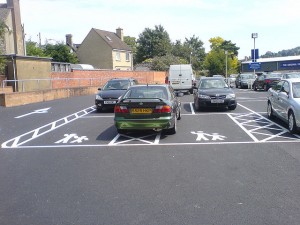
2720967080_0ee1f9d858_zThis phrase is used when you convince yourself that you shouldn’t care, don’t want to care, or just don’t care when making a decision.

Alternative versions of this phrase are “wat kan mij het ook schelen!” or “wat kan mij dat nou schelen!”, the latter also suitable to use as a response to a claim, much the same way as “lekker belangrijk!“.

In this phrase “schelen” has the meaning of “to be of concern” or “to
matter”. You will also hear the verb used in the translation of “to
differ” or “to make a (financial) difference”.
(Photo: Francis Barton (flickr.com) – some rights reserved.)

Examples:
– “Wat kan mij het schelen, ik parkeer gewoon op de stoep!”

(“What do I care, I’ll just park on the pavement/side walk!”)

– “Ik ga vandaag een uur eerder naar huis, wat kan mij het schelen!”
(“I’m going home an hour early today, what do I care!”)

– “Nou, dan ga je toch niet mee vanavond. Wat kan mij dat nou schelen!”
(“Well, then stay at home tonight. As if I care!” Literally “dan ga je toch niet mee” translates as “then you don’t come along” with “toch” emphasizing that it is contrary to what was expected/agreed.)

– “Meneer, dit pak staat u echt geweldig!” – “Het is eigenlijk boven mijn budget, maar wat kan mij het ook schelen, ik doe het!”
(“Sir, this suit looks great on you!” – “It is in fact above budget, but what do I care, I’ll take it!)

Vriend

friend [noun] [de vriend, de vrienden] Iconspeaker_klein

Vriend
The translation is obvious and the usage is obvious, however… This noun is a typical example of a noun of which the diminutive has a specific meaning. "Vriendje" is used for a friend of a small boy (if also small of course), but also for a "boyfriend"… The same is true when "vriend" is used with a possessive pronoun, e.g. "mijn".
If you want to avoid strange looks don’t say "dit is mijn vriend",  when you mean to say "this is a friend of mine", but say "dit is een vriend van mij" instead. Note that in fact "dit is mijn vriend" translates to "this is my friend" so grammatically there is no issue 🙂

This subtlety also exists with the female version: "vriendin".

"Vriend" can also be used in the meaning of "mate" or "dude". See also DWOTD Makker.

Examples:
– "Mag ik je aan mijn vriend voorstellen?"
("May I introduce you to my boyfriend?")

– "Ik durf het bijna niet te vragen, maar ben jij nu mijn vriendje?"
("I’m a bit shy to ask, but are you now my boyfriend?")

– "Dit is een vriend van mij. Ik ken hem nog van vroeger."
("This is a friend of mine. We’ve been friends since we were young / We’ve been friends for a long time." Literally: I know him from the old days.)

– "Dit is mijn vriend. Eh, ik bedoel, dit is een vriend van mij."

("This is my (boy)friend. Err, I mean, this is a friend of mine.")

– "Als je wint, heb je vrienden."
("When you win, you have friends." Line from the song "Als je wint" by "Doe Maar", a famous Dutch eighties ska/reggae/pop band.)

– "Op deze manier maak je geen vrienden gast, ik zou maar even dimmen als ik jou was!"
("You don’t make yourself popular this way mate, I would take it a little easier if I were you!" Literally: "This way you don’t make friends…")

Related words:
– Vriendelijk: friendly [adverb/adjective].
– Vriendschappelijk: friendly, amicable [adverb/adjective] (as in "a friendly match").
– Maat/maatje/makker: popular slang synonyms for "vriend" [noun] [de maat/het maatje/de makker, de maatjes/de makkers].
– Vriendschap: friendship [noun] [de vriendschap, no plural].

Example:
– "Een keer trek je de conclusie, vriendschap is een illusie."
("One time you will draw the conclusion, friendschip is an illusion." Famous line from the song "Vriendschap" by the Dutch eighties band "Het goede doel".)

Extra:
Toon Hermans was a Dutch comedian who was very popular in the fifties and sixties. He wrote the well-known poem "Vriend". You might see it on a "wc-tegeltje" if you visit elderly Dutch people. It goes:

"Je hebt iemand nodig, stil en oprecht,
Die als het erop aankomt, voor je bidt of voor je vecht.
Pas als je iemand hebt, die met je lacht en met je grient,
Dan pas kun je zeggen, ik heb een vriend."

Some help on the translation: "oprecht" translates to "sincere". The verb "grienen" is a synonym for "huilen", but is not used much anymore.